A website redesign can feel like a fresh start. The brand has evolved, the pages are showing their age, and the team has a growing list of things it would like to change. Bringing everything together in a new experience can seem like the obvious next step.
The investment still needs a clear job to do. Targeted optimisation makes sense when the existing platform can support the improvements customers need. A broader redesign becomes more relevant when problems span the experience, the structure no longer fits the business, or technical constraints make incremental change impractical.
The useful starting point is the customer problem. What can people no longer understand or complete, and what is preventing the business from addressing it?
The brief shapes the solution
“We need a better website” leaves too much open to interpretation. One stakeholder may mean stronger visual presentation. Another may mean fewer support enquiries, easier content management or more suitable leads. These are different problems, even when they sit within the same user experience.
A more useful brief might be: customers cannot compare the service packages, sales receives unsuitable enquiries, or the team cannot publish product information without development support. Each statement points towards evidence that can be collected and an outcome that can be assessed.
Some problems are local. A form may be difficult to use, or a landing page may explain the offer poorly. Others affect the whole experience: an information architecture built around an outdated product range, inaccessible shared components, or a platform that cannot support required integrations.
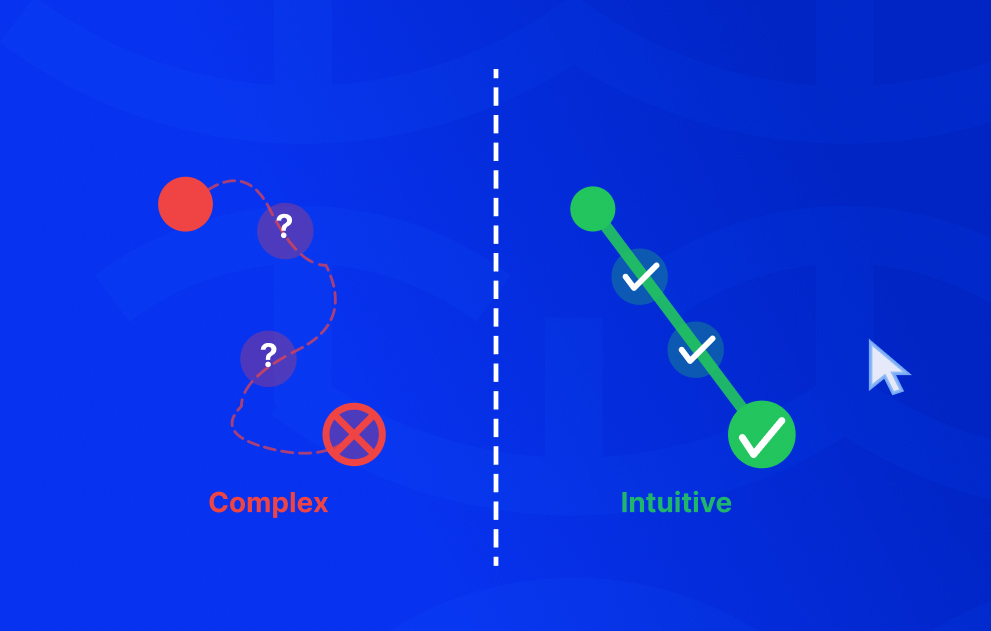
The distinction matters because the scope of change should fit the scope of the problem. The principles in Why Simplicity Still Wins Online are relevant here: customers need a clear path through the task, whatever the age of the design.
Compare the available approaches
| Approach | When it fits | What to establish first |
|---|---|---|
| Targeted optimisation | The platform is workable and problems are concentrated in identifiable journeys | Evidence for the problem and a practical route to change |
| Phased redesign | Shared components or several journeys need improvement, but parts of the site remain useful | Dependencies, release boundaries and a consistent design system |
| Full redesign or replatforming | Structural or technical constraints prevent essential customer and business needs being met | Requirements, migration risks and the total cost of ownership |
A phased approach deserves explicit consideration. A business may need new navigation and product templates without replacing every page or changing its commerce platform at the same time.
Equally, repeated workarounds can become expensive. If each improvement requires fragile custom development, retaining the current system may carry more cost and risk than replacing it.
Gather evidence before selecting a solution
Start with the customer journeys that matter commercially. Review how customers arrive, what they need to evaluate and where they struggle to progress. Combine behavioural data with usability research and the questions received by sales or support. A structured CRO audit can bring that evidence together before the scope is fixed.
Then examine the technical constraints. Can the platform deliver the required experience? Are integrations reliable? Can the team maintain content and components? Which accessibility problems are shared across templates?
For acquisition-dependent websites, include discoverability and measurement in the assessment. A redesign that changes URLs, content structure or event tracking needs a migration plan, with ownership for redirects, indexability checks and measurement verification.
Google’s site-move guidance includes URL mapping and redirects when addresses change. Those requirements belong in the project scope before launch. Google guidance on site moves.
Build the commercial case around explicit assumptions
Use the current business baseline to evaluate the opportunity. For an ecommerce journey, that might include eligible traffic, purchase completion, order economics and repeat behaviour. For lead generation, include qualification and opportunity progression.
A hypothetical example illustrates the difference between a forecast and a planning scenario.
Suppose a business receives 20,000 relevant sessions per month and generates 400 enquiries. If 15% of those enquiries become qualified opportunities, the journey produces 60 opportunities. A proposed change that generates 500 enquiries but qualifies only 10% would produce 50 opportunities.
The higher form conversion rate would mask a weaker result on that measure. Neither scenario tells us revenue without further information about deal value, win rate and costs.
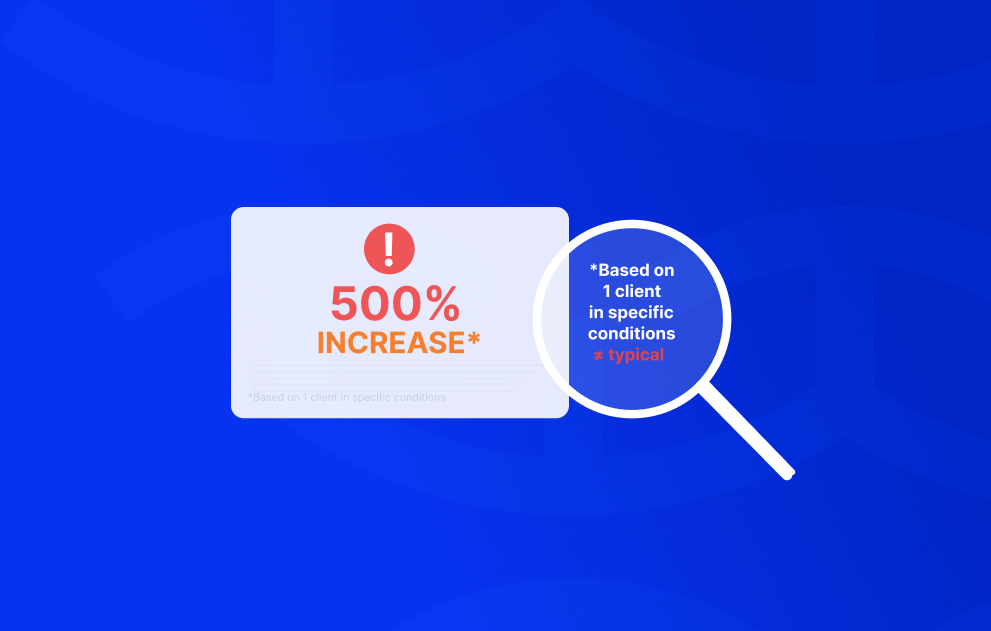
Use scenarios to test whether an investment could make commercial sense. Do not present the assumed uplift as a promised redesign result.
Include delivery, migration, training, maintenance and the opportunity cost of the team’s time. Compare those costs with a targeted programme capable of addressing the same problem.
Validate the decisions that are expensive to reverse
Research helps make expensive decisions easier to defend. If the team understands which questions customers need answered and which tasks they struggle to complete, the design brief becomes more specific.
Test whether customers can find the right service, distinguish between products and understand what happens after an enquiry. Use prototypes to evaluate important tasks before the design is embedded in a full build. Messaging also needs that context. Don’t Overdo the Benefit-Led Approach explores why an effective copy treatment depends on what the visitor already understands.
Prototype research can reveal comprehension and usability problems. It does not establish the conversion rate that a live website will achieve.
Where feasible, test a proposed change on an existing journey before extending it across the site. When an experiment is impractical, document the evidence behind the decision and the uncertainty that remains. The appropriate method depends on the decision, the available audience and the cost of being wrong.
Plan how the change will be evaluated
Define the measures before launch. Preserve a usable baseline and check that events retain their intended meaning.
A simple before-and-after comparison can be affected by seasonality, campaigns, pricing, stock and audience changes. Use controlled comparisons where practical, and account for these competing explanations when interpreting an observational result.
Agree what would trigger further investigation or a rollback. A working launch is an operational milestone; the customer and commercial outcomes require continued observation.
A clearer basis for investment
The strongest brief specifies the problem, the evidence, the constraints and the outcome. It gives design and delivery teams room to solve the problem while making the investment accountable.
At Foster & Funnel, our UI & UX Design work connects customer evidence with practical design and validation. We work alongside product, marketing and delivery teams to establish what needs to change and how its impact will be measured. If a redesign is on the table, talk to us about the decision before committing to the build.