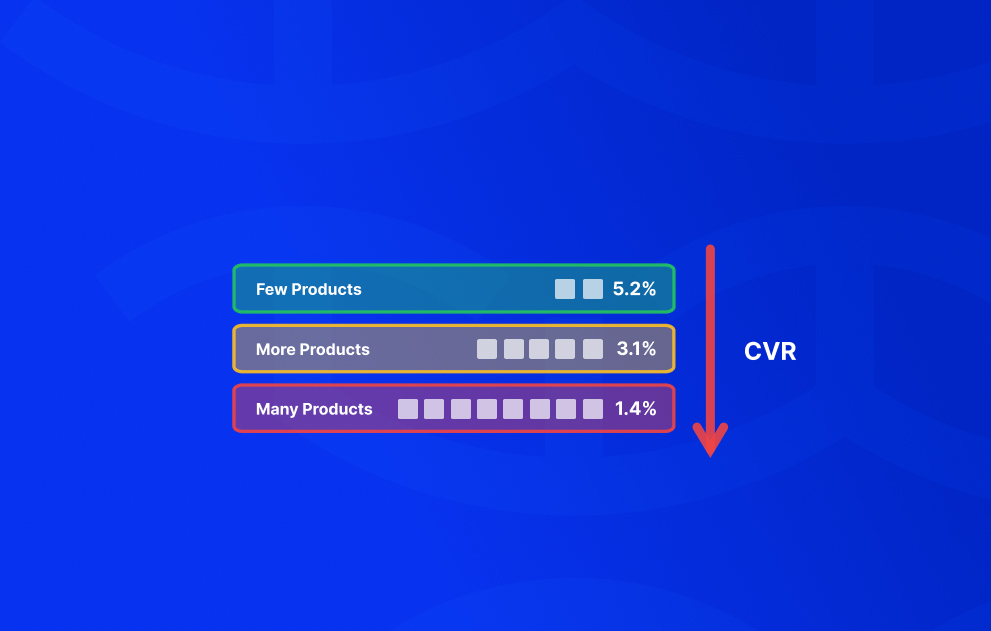
For most of the past decade, traditional ecommerce conversion rate optimisation (CRO) has focused on human behaviour. Teams have tested layouts, hierarchy, calls-to-action, checkout flow and reassurance messaging because the assumption was straightforward: a user arrives, evaluates, hesitates, then acts.
That dynamic hasn’t disappeared. It has shifted.
Today, large language model (LLM) systems increasingly perform the information search and evaluation of alternatives on behalf of humans. The first stage of decision-making is no longer guaranteed to happen on your website.
From Recommendation to Execution
Over the past year, agentic commerce has moved from theory into implementation. AI agents are no longer limited to recommending products; they are beginning to initiate and complete transactions.

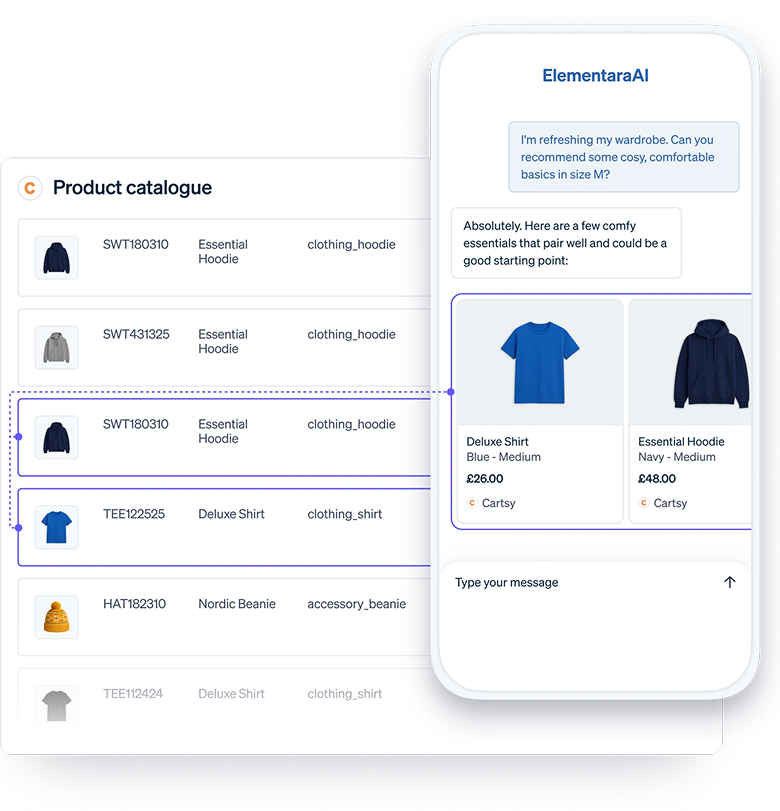
Infrastructure providers such as Stripe are developing Agentic Commerce Protocols (ACP) that allow merchants to expose product catalogues directly to AI agents and accept agent-initiated payments through secure, machine-mediated transaction layers. This means AI systems can compare products and execute purchases within defined safeguards, while merchants retain control over fulfilment and post-purchase experience.
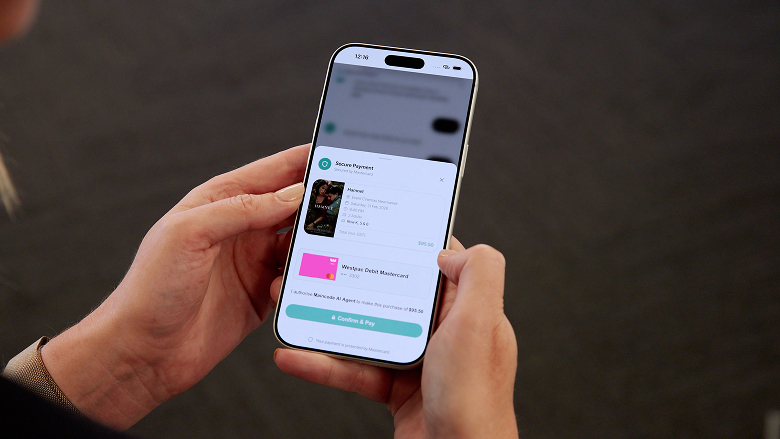
Earlier this month, Mastercard and Westpac completed what was reported as New Zealand’s first authenticated agentic transactions. The test included the purchase of movie tickets from a cinema in Auckland, executed by an authorised AI on behalf of a customer.
That moment matters. It signals a shift from search and recommendation to verified transaction execution.
The Evaluation Layer Is Compressing
Consider what this enables.
A holiday can now be planned through a series of prompts which only need to define destination, budget and dates with an AI assembling flights, accommodation, transfers, restaurant reservations and insurance, ready for confirmation in a single step.
A customer can photograph a room, receive furniture suggestions superimposed to scale, confirm dimensions and availability, and complete the purchase immediately.
In both cases, the information search and the evaluation of alternatives happen before the brand meaningfully enters the interaction. This critical information search and evaluation on alternatives stages, which brands have direct influence, is compressed.
For ecommerce businesses, that compression changes the economics of visibility.
LLM Adoption Is Not Theoretical
The underlying adoption curve reinforces this shift.
By late last year, estimates suggested roughly one billion people globally were interacting with LLM-based platforms monthly. In several markets, close to half of adults had used an LLM at least once. Weekly professional usage has become routine.
The speed of uptake has rivalled early smartphone adoption and exceeded early social media growth curves. Two years ago, most organisations were experimenting with AI cautiously. Today, many rely on it daily.
Retail and ecommerce are already among a brands most active application domains for LLM systems. When consumers begin journeys with prompts such as:
- “best carry-on backpack under $200”
- “clean protein powder with no artificial sweeteners”
- “family-friendly Italy itinerary in September under $7,000”
AI systems interpret constraints, evaluate structured attributes and surface a shortlist.
That changes CRO.
CRO Now Begins Before the Click
If an AI agent never surfaces your product because the structured signals are incomplete, inconsistent or ambiguous, there is no human click to optimise.
Conversion rate optimisation is no longer only about persuading a visitor; it is also about being selected before persuasion begins.
This is where structured product clarity becomes foundational.
Concise specifications, transparent pricing, delivery timeframes, stock availability, suitability statements, return terms and clearly themed reviews become part of the optimisation layer. These are not just UX enhancements; they are evaluation signals.
Clarity improves both machine confidence and human trust.
Because in agentic commerce, poor information scent doesn’t just increase bounce rate it may remove you from consideration entirely.
The Role of Structured Data and Schema
Schema deserves attention, but not for superficial SEO reasons.
Structured data frameworks like product schema, pricing attributes, availability markers and review markup standardise signals that machines interpret consistently. In an agentic environment, schema is less about ranking and more about interpretability.
Clean, consistent structured data reduces ambiguity. Inconsistent attributes across SKUs or poorly marked-up availability become silent conversion leaks.
If structured data is incomplete, AI systems may fill gaps with assumptions. That is rarely favourable.
Impact Across Business Models
The implications differ by category.
In travel and experience-based sectors, clarity around inclusions, exclusions, cancellation policies and suitability profiles will influence whether an itinerary is surfaced at all. If the AI cannot confidently determine what is included in a package, it may exclude it from recommendations.
For direct-to-consumer brands such as sports nutrition providers, macro breakdowns, ingredient transparency, cost-per-serve calculations and shipping timelines become comparability essentials. Lifestyle positioning still matters, but structured clarity determines shortlist eligibility.
Large retailers and marketplaces such as Trade Me, Kmart, and IKEA benefit from catalogue depth and metadata scale. However, if AI systems narrow options to a handful of clearly comparable products, the long tail may shrink further. Competitive pressure will concentrate around data consistency, availability reliability and structured completeness across thousands or millions of SKUs.
In this context, data hygiene becomes a competitive advantage.
How Recommendations Will Surface
Recommendations will not always look like search results.
They may appear as ranked summaries within conversational interfaces. They may be embedded within operating systems or digital assistants. They may be surfaced inside payment environments. In some cases, the AI may complete the transaction entirely and present only a confirmation step.
In every scenario, selection precedes persuasion.
The optimisation question shifts from “how do we increase click-through?” to “how do we ensure confident inclusion?”
Perspective Matters
It is worth keeping perspective.
LLM systems represent an early stage of AI capability. Even today’s models are likely closer to the dial-up phase of internet evolution than to its broadband maturity. If adoption has accelerated this quickly at an early stage, the commercial implications deserve careful attention.
This is not about speculation. It is about observing infrastructure shifts and adjusting accordingly.
The Practical Takeaway
For ecommerce teams and optimisation professionals, the conclusion is practical.
Clarity, specificity and unambiguous transactional detail are no longer simply good UX; they are mechanisms for demand capture.
Conversion rate optimisation used to begin at the landing page. In the era of agentic commerce, it increasingly begins before the visitor ever arrives.