“Lead with the benefit” is one of the most repeated pieces of advice in marketing. It appears in copywriting frameworks, UX workshops, brand guidelines, and product marketing decks. Rewrite the headline. Reframe the section titles. Turn every feature into an outcome.
And in many cases, that advice works.
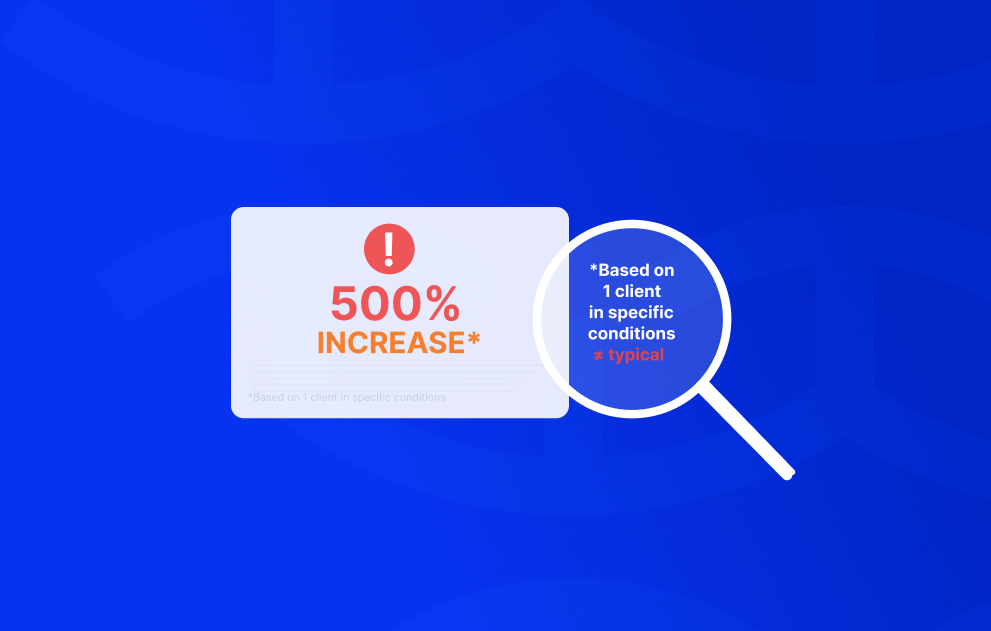
In one recent optimisation test, we updated section titles to follow a clearer benefit/feature structure and aligned supporting imagery accordingly. The result was measurable. Desktop scroll depth increased significantly and overall conversion improved by 3 percent. The reframing sharpened value perception and made the page feel more commercially direct.
So this is not an argument against benefit-led messaging.
It is an argument against treating it as a universal rule.
Because benefit-led copy works in the right conditions. And underperforms in the wrong ones.
Why Benefit-Led Messaging Works
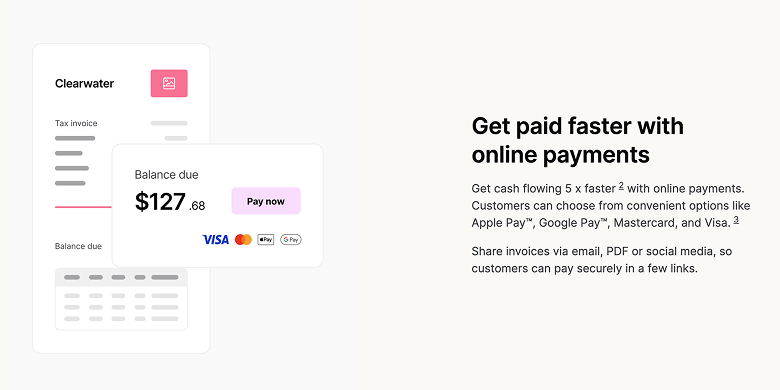
Benefit-led messaging reduces interpretation. Instead of describing what a feature does in isolation, it connects functionality directly to impact. Rather than presenting “automated invoice reconciliation software,” you frame it as “save hours every month on manual invoice processing.” The shift seems subtle, but it closes the cognitive gap between capability and consequence.
In categories where the audience already understands the problem and recognises the feature set, this framing accelerates evaluation. It shortens the distance between comprehension and intent. In the test referenced above, the product category was established, the functionality was familiar, and visitors were largely mid-to-high intent. The benefit structure did not introduce new concepts. It simply clarified value.
In other words, uncertainty was already low. The benefits amplified momentum rather than replacing missing clarity.
The Hidden Assumption Behind Benefit-First Copy
Benefit-led messaging carries an embedded assumption: that the visitor already understands what you are, what problem you solve, and how your solution works. It assumes category literacy. It assumes problem awareness. It assumes baseline trust.
When those assumptions are incorrect, benefit-heavy copy can increase friction rather than reduce it.
Consider a headline like “Unlock exponential growth with intelligent revenue acceleration.” The promise is ambitious, but without context it is abstract. The reader must decode what you do, evaluate whether it applies to them, and decide whether the claim is credible, all at the same time. That simultaneous processing increases cognitive load.
This is where principles like Cognitive Load and Friction become critical. Benefits increase motivation, but clarity reduces effort. When effort rises too early in the journey, motivation is rarely enough to compensate.
Sequence matters.
Messaging Is Layered, Not Stylistic
One of the more common mistakes in digital optimisation is treating messaging as a stylistic choice rather than a structural one. Teams debate whether they should be benefit-led or feature-led, as if the two are mutually exclusive. In reality, high-performing pages tend to layer different forms of messaging according to the uncertainty that needs to be resolved.
At the top of the page, the primary job is usually category clarity. What is this? Where does it sit? Who is it for? Without that anchor, everything that follows floats. This is closely tied to Information Scent, the degree to which users can predict what they will get before committing attention.
Once clarity is established, relevance and problem framing often come next. Does the brand understand my context? Are they articulating a friction I recognise? From there, mechanism and explanation become important. Sophisticated buyers, particularly in B2B and high-consideration environments, want causality. They want to understand the “how,” not just the “what.”
Only after these layers are addressed do benefits fully land. When the reader understands the category, recognises the problem, and believes the mechanism, the outcome becomes credible rather than aspirational.
This is not copywriting theory. It is applied Conversion Rate Optimisation thinking. Messaging should reduce the most pressing uncertainty at each stage of the journey.
A CRO Example: Clarity Before Ambition
In a separate optimisation project, a page originally opened with the headline: “Experience unlimited freedom with seamless connectivity.” The language was confident and commercially sharp. Internally, it felt right.
Behavioural data suggested otherwise. Bounce rate was high. Scroll depth was shallow. Engagement with proof and case studies was weaker than expected.
Our hypothesis was not that the benefit was weak, but that clarity was insufficient. Visitors were landing cold. They were not yet anchored in category understanding.
The revised version opened more plainly: “Unlimited mobile plans with 5G data and no lock-in contracts.” The subheading explained the mechanism in practical terms, outlining how we identify intent gaps and remove friction through structured experimentation.
The ambition did not disappear. It was repositioned.
The result was lower bounce rate, deeper scroll, stronger interaction with case studies, and improved conversion. The improvement did not come from promising more. It came from reducing ambiguity.
This is a common pattern in optimisation work. Before increasing persuasive intensity, reduce cognitive effort.
When Benefit-Led Messaging Backfires
Benefit-heavy messaging tends to underperform in three recurring scenarios.
First, when the category is unfamiliar. If visitors are unsure what you actually are, leading with outcomes skips a step in their evaluation process.
Second, when the mechanism is complex. In environments where buyers need technical or operational confidence, explanation often outperforms aspiration.
Third, when trust is low. Bold benefits without proof can trigger scepticism, particularly among experienced buyers. In these contexts, elements such as Social Proof and transparent process explanation carry more weight than transformation language.
None of this invalidates benefit-led framing. It simply defines its optimal conditions.
The Risk of Institutionalising a Winning Tactic
When a benefit-led test produces positive results, there is a natural tendency to standardise it. Every section title becomes outcome-heavy. Every headline promises impact. Every page foregrounds transformation.
But optimisation is contextual. What worked in one environment worked because the audience was ready for it. The same structure applied to an earlier stage audience, or a more sceptical segment, may flatten performance.
This is where understanding Buyer Intent becomes critical. Messaging should reflect the visitor’s state, not a preferred stylistic framework.
Conversion performance rarely improves because we “sold harder.” It improves because we aligned more precisely.