You will already know that not all website traffic behaves or converts in the same way. While some of that difference can be attributed to channel, device, or demographics, the real divide is intent.
Some visitors arrive already knowing they need what you offer. Others arrive unsure what you offer, or whether they even want it at all. These two mindsets sit at opposite ends of the buyer journey, yet they are often treated exactly the same in digital experiences. When that happens, the effort required to convert increases significantly, results flatten, and teams are left wondering why strong traffic volumes fail to translate into the outcomes they want.
A useful way to think about this difference is through a sales lens. Trying to convert someone of low intent at the top of the funnel who is asking “What is this?” or “Do I want this?” is the digital equivalent of a cold call. Converting someone of high intent who already says “I need this” is closer to receiving a red hot, inbound enquiry. And while both can be worked, but the effort required and the likelihood of success are worlds apart.
When the Visitor Says “I Need This”
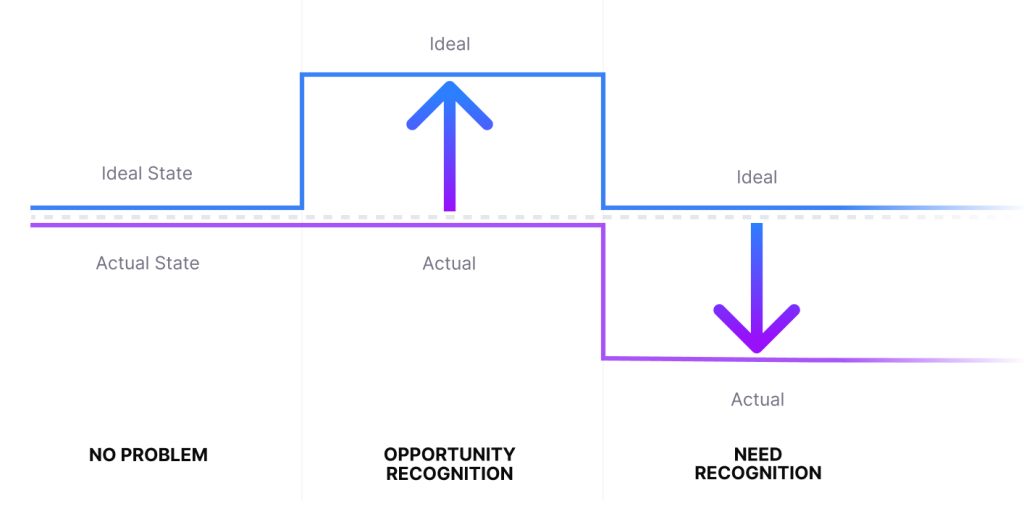
We love these bottom-of-funnel visitors. They are already in decision-making mode. They have recognised a problem, felt the cost of inaction, and accepted that change is necessary to make their situation ideal. Their remaining question is no longer whether to act, but who to act with.
Consider a business researching a new cybersecurity solution after experiencing a data breach. They know they need help. They are comparing providers, response times, certifications, and risk mitigation. They are ready to take action now.
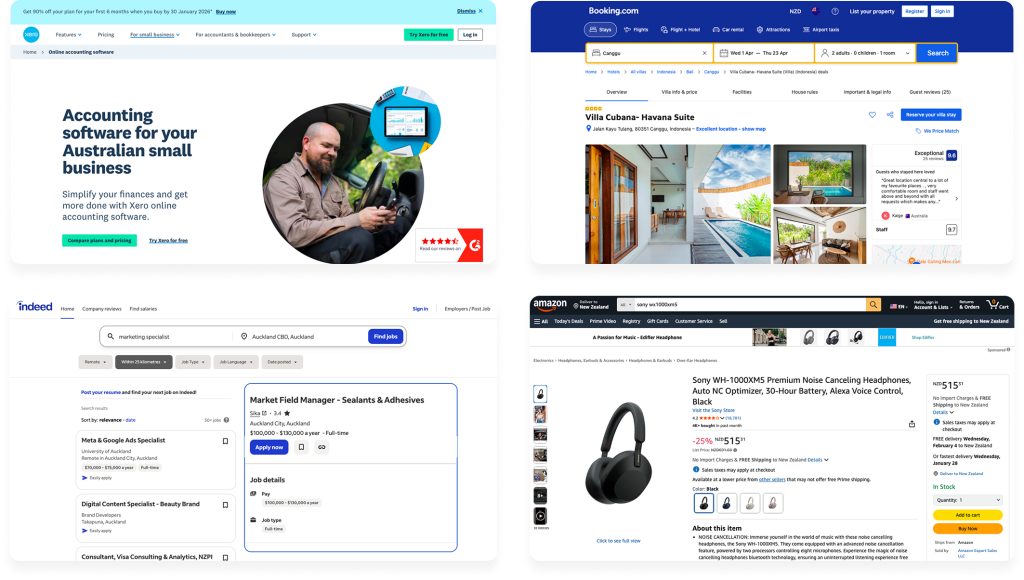
When these visitors land on a website, they are scanning for confidence. They want reassurance that they are in the right place and that the solution will do what it claims. Clear value propositions, credible proof, transparent pricing, and obvious next steps tend to perform well here. Conversion paths can be short because the mental work has largely been done before the visit even begins.
This is the high-quality, resolution-driven traffic every business wants more of. It behaves like inbound demand. The role of the website is not to convince, but to confirm that you are the right option when evaluated against alternatives.
When the Visitor Asks “Do I Want This?”
The challenge is very different when a visitor is still deciding whether they want something, or even what that something is. These users are at the very top of the funnel and firmly in information-search mode. Nothing is broken enough to force action. Their current situation is fine, even if it is not the best. Curiosity, and sometimes boredom, is what drives the visit rather than urgency.
Using the same cybersecurity example, this might be a business where security is on the roadmap for next year. There has been no incident. Everything is working well enough. They are curious, but non-committal.
Trying to convert this visitor too quickly is like calling someone out of the blue, in the middle of winter, and asking them to buy a pool. It is possible, but it requires far more persuasion, context, and trust-building. Hard conversion asks at this stage feel premature and often trigger resistance rather than progress.
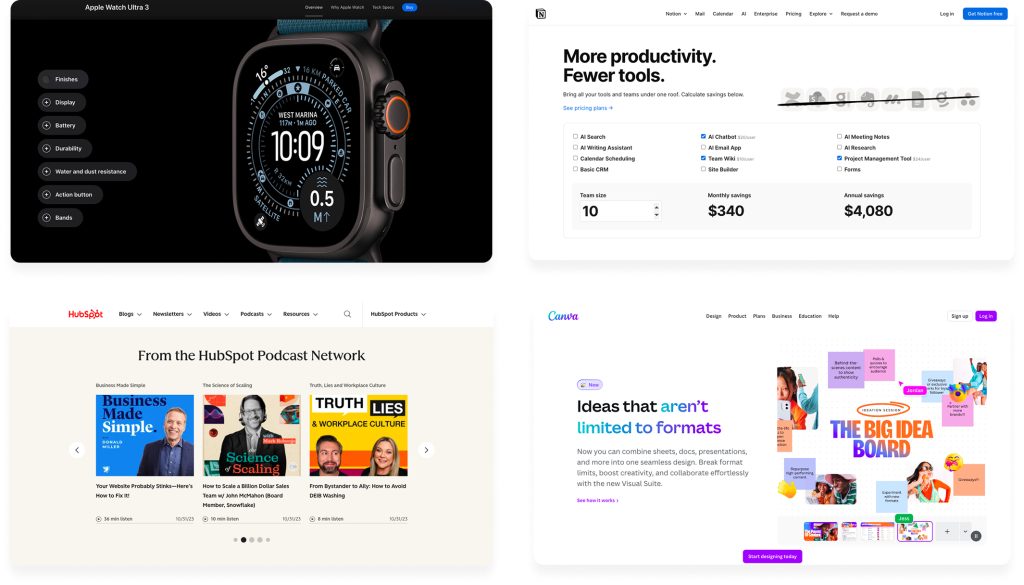
Instead of reducing friction, the effort here needs to build conviction through nurture and demand generation. The experience should help the visitor understand what better looks like, what they might be missing, and why staying the same carries a cost, even if that cost is not immediately obvious. Softer engagement points such as comparisons, benchmarks, examples, or exploratory tools tend to work better because they allow demand to develop organically, moving the visitor closer to need recognition at their own pace.
Why Conversion Effort Should Change With Intent
This difference in mindset has real implications for how digital experiences should be designed. High-intent visitors respond well to efficiency and clarity. Lower-intent visitors need time, education, and perspective.
The biggest problem we see is when an experience tries to do both jobs at once. Messaging becomes diluted. Calls to action feel either too aggressive or too vague. The result is an experience that speaks to everyone, but effectively to no one.

Matching Effort to Intent
The easiest route is to focus only on lower-funnel, high-intent traffic. In reality, that traffic often comes with significantly higher acquisition costs and introduces risk if it is the only source feeding the pipeline.
The best-performing websites do not try to convert everyone in the same way.
Low-intent visitors still matter. They typically represent a disproportionate share of total traffic, often labelled as the “99%”, and usually come at little to no acquisition cost. The trade-off is time to conversion. Despite this, low-intent traffic can be just as valuable as high-intent traffic when it is nurtured correctly.
The best-performing websites do not try to convert everyone in the same way. They either segment deliberately or allow intent to reveal itself through behaviour before escalating the ask. They understand that conversion is rarely about persuading harder. More often, it is about matching effort to intent.
If this distinction resonates, it is worth taking a fresh look at how your own site treats visitors at different levels of readiness. Sometimes small changes in timing, framing, or effort make a disproportionate difference to the bottom line.